The missing layer
between visits
MobiMed connects our A3 wellness wearable and patient app to a cross-specialty EHR — with an AI-driven Guardian Layer that makes caregiver context permissioned, trusted, and clinically usable.
US Healthcare Market
Americans in non-hospital care
RPM revenue / patient / month
Wearable · App · EHR — one system
Healthcare decisions are made with incomplete context.
Not because anyone is careless — but because day-to-day reality rarely makes it into care in a usable way. The result is guessing, delays, and preventable escalation.
"When context is missing, care is slower, costlier, and more stressful — for patients, caregivers, and providers."
Clinicians see patients briefly, then guess for months
Between visits, patterns shift — but the care team sees none of it.
→ Delayed decisions and missed signalsCaregivers are invisible in the EHR
Parents, POAs, and assisted living staff hold critical context but lack a structured way to contribute.
→ Caregiver frustration and avoidable riskNo shared longitudinal view across specialties
Health data is fragmented, so teams can't see baseline vs. change.
→ Redundant work and disconnected careThree connected surfaces.
One shared story.
Patients use it daily because it's easy. Caregivers use it because it's clear. Clinicians use it because it's actionable.
A3 Pin Wearable
Continuous wellness monitoring — HR, SpO₂, fall detection, gait, and Sage AI voice. Always on, always syncing.
Learn more →02Patient App
Voice-first daily check-ins. Simple trends. Full control over who sees your health data and what they can do with it.
Learn more →03Guardian Layer
Permissioned, auditable caregiver access. Parents, POAs, and care staff contribute context responsibly.
Learn more →04Clinical EHR
FHIR R4, Epic-connected, RPM billing automated. Longitudinal views with Sage AI summaries — inside your workflow.
Learn more →From daily life to
clinical clarity.
Designed for consistency, safe caregiving input, and clinician-ready summaries — embedded into workflows that already exist.
Patient checks in
Voice check-ins and A3 Pin passive capture: food, fitness, mood, symptoms, vitals — without manual logging.
→Guardian adds context
Caregiver observations submitted with role-based permissions, time bounds, and full auditability.
→AI summarizes change
Baseline vs. change highlighted with Sage AI source-aware summaries — not raw data streams.
→Clinician acts in-EHR
Teams see the longitudinal view inside Epic, Cerner, and 13+ others — triage earlier with confidence.
Clearer decisions, fewer surprises.
Care that reflects real life — between visits, across people, and over time.
Not more data — better signal.
MobiMed reduces guesswork and makes care feel coordinated for every stakeholder.
Earlier Signal
Spot meaningful changes sooner with consistent between-visit context and baseline tracking.
✓ Provider win: faster triageLess Burden
Patients don't have to "keep notes." The story stays current — automatically, between every visit.
✓ Patient win: effortless consistencyTrusted Caregiving
Caregiver input is permissioned, labeled, and auditable — so it helps care rather than complicates it.
✓ System win: safer involvementRPM Revenue
$130–$160/patient/month in Medicare reimbursement — automated for CPT 99454, 99457, 99458.
✓ Revenue win: $14,700+/mo per 100 ptsEHR Integration
FHIR R4, SMART on FHIR, LOINC-coded. Epic, Cerner, athenahealth, and 10+ more out of the box.
✓ IT win: no rip and replaceHealth Equity by Design
Built from a family caregiving experience. Offline support, Easy to use design, underserved communities first.
✓ Mission win: care for everyoneWhy we built MobiMed
Caring for Nana Bea
8 years ago, our co-founder Kiamesha Johnson began accompanying her grandmother, Nana Bea, to appointment after appointment as she managed multiple chronic conditions.
The Refreshing Medical Memory Journal
Nana Bea created a small booklet she always carried — capturing what happened after every visit. It exposed a deeper truth: healthcare decisions were still being made with fragmented, incomplete context.
MobiMed is born
Kiamesha met co-founder Lewis Goldsmith to reimagine that journal as a modern, shared system. MobiMed became a connected experience for patients, caregivers, and clinicians.
Her journal became our purpose
Nana Bea passed away in 2023 — but her journal became our mission. Every feature we build is in service of families navigating care the way she did.
In memory of Nana BeaHer medical memory journal sparked the idea. Her story is why we build with empathy first.
Want to learn more?
Tell us who you are and what you're exploring. We're sharing what we're building with investors, clinicians, and partners who want a closer look.
Always on. Always syncing.
Continuous wellness monitoring — voice-activated, clinically connected, and designed to disappear into daily life.
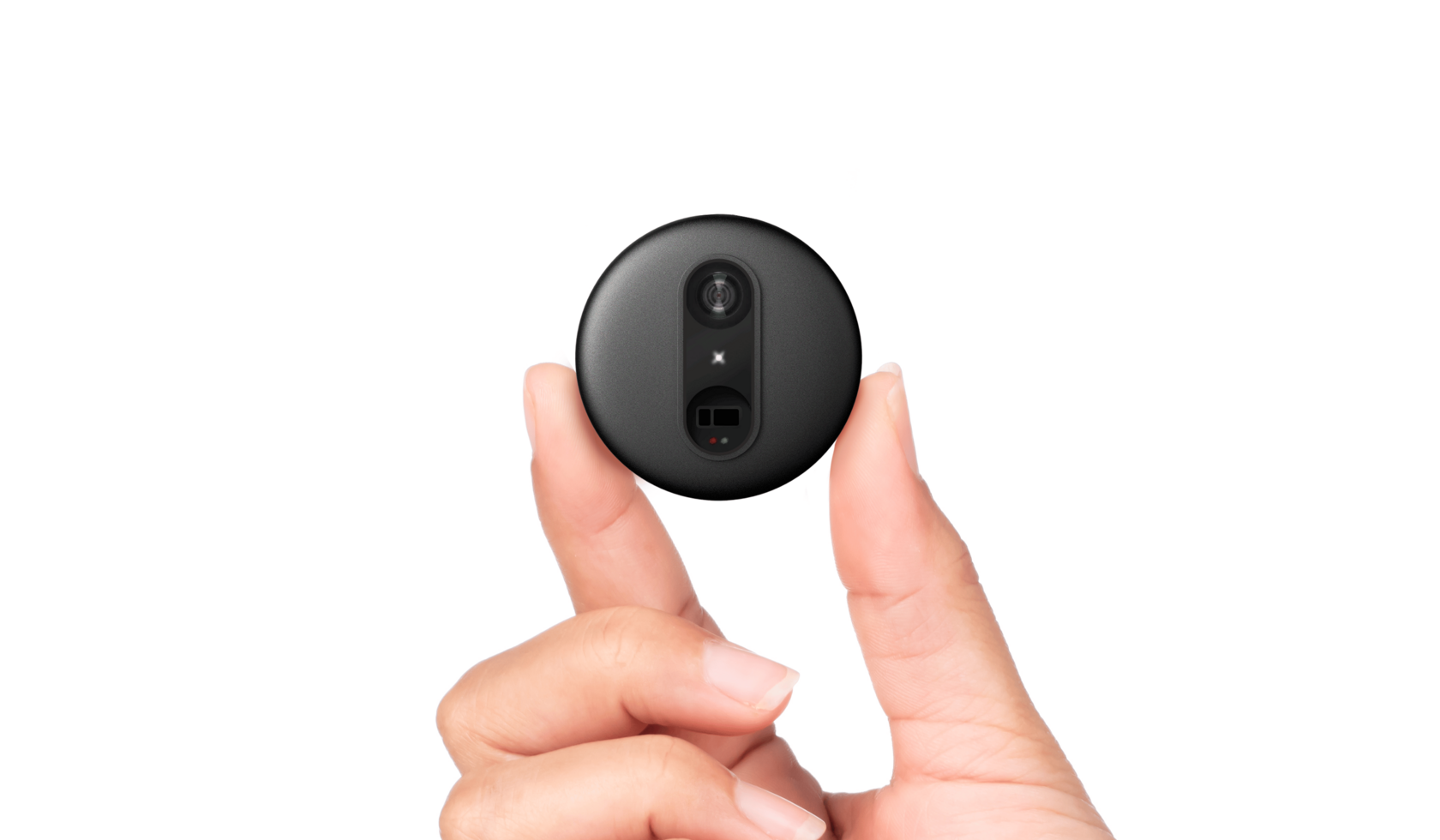
Capture what happens between visits.
The A3 Pin is a small, wearable device that captures your health in the background — without any effort on your part. It pairs with the MobiMed app over Bluetooth and streams data continuously to your care team.
Heart Rate & HRV
Continuous PPG-based HR monitoring with HRV calculation. Anomalies flagged in real time.
SpO₂ / Blood Oxygen
Wellness-grade oxygen saturation with alert thresholds configured by your care team.
Skin Temperature
Continuous temperature for fever trending and circadian rhythm analysis.
Gait & Fall Detection
Accelerometer-based gait analysis and automatic fall detection with instant alert routing.
GPS via Phone
Geofence monitoring and location awareness via the paired smartphone.
Sage AI Voice
"Hey Sage" wake word detected on-device. Streams commands to phone for full NLU processing.
Wellness-grade today. Clinical-grade tomorrow.
In Phase 1, all A3 Pin data is tagged as wellness-grade — valuable for trend detection, behavioral insight, and care coordination, but not yet FDA-cleared for clinical diagnosis. We are actively pursuing FDA 510(k) Class II medical device clearance.
Wellness data still drives RPM billing through CPT codes 99454/99457 using the existing Medicare framework for device supply and clinical management time.
LOINC-coded from the moment of capture.
Every reading from the A3 Pin is tagged with its LOINC code at capture — not at import. Data is interoperable with any FHIR-capable system from the first byte.
Ready to monitor what happens between visits?
Join our waitlist to be among the first to receive the A3 Pin at launch.
Join the WaitlistPatient & Guardian App
One app. Multiple roles. Voice-first daily check-ins for patients. Permissioned access for caregivers and care staff.
Your health, captured effortlessly.
The MobiMed Care Companion app is designed around a simple truth: if logging your health feels like a chore, you won't do it consistently. Voice-first, low-friction, and built for daily life.
Sage AI Voice Logging
Say "Hey Sage, I had oatmeal for breakfast" and your meal, calories, and macros are logged, hands free. Same for medications, mood, hydration, and workouts.
Trends, Not Charts
Simple, readable summaries of your health over time. No overwhelming data dumps — just what's meaningful and what has changed.
Daily Checklist
Personalized daily health checklist configured by your care team — medications, vitals, mood, all in one place.
Full Sharing Control
You decide what's shared, with whom, and for how long. Guardian access is granular — grant or revoke at any time.
Contribute without overstepping.
Whether you're a parent, POA, Assisted-living nurse, or CNA, the Guardian Layer gives you a structured, permissioned way to contribute to the patient's care record.
Role-Based Access
See exactly what you're permitted to see — vitals, medications, checklist, and nothing beyond. Clarity on access at all times.
Care Notes
"She seemed confused this morning" — structured observations flow directly to the clinical team's patient record in the EHR layer.
Medication Confirmation
Confirm or flag medications as taken, refused, or skipped. Timestamped and synced to the EHR with your name attached.
Agency & Enterprise
Care staff on shift get a professional account that syncs activity to the Command Center — visible to supervisors and admin in real time.
One app. Five personas.
The tab bar, screens, and Sage AI commands adapt automatically to the logged-in role.
Individual Patient
Personal health tracking, A3 Pin vitals, Sage AI companion
Family Caregiver
Guardian profiles, medication confirmation, care notes
CNA / Home Health
Shift tasks, visit logs, medication admin, incident reports
RN / Clinical Staff
Patient panel, clinical alerts, care plan management
Supervisor / Admin
Staff scheduling, compliance dashboard, shift handoff reports
Built for the people who care.
Join our waitlist for early app access and 10% off device purchase.
Join the WaitlistCaregiver context, structured and trusted.
Permissioned, auditable caregiver input that is structured so it helps care rather than complicates it.
Caregiver context is clinically invisible today.
Parents, POAs, and assisted living staff hold critical observations. But today, that context lives in phone calls and text threads, which makes care details invisible to the EHR, untimed, unverified, and unactionable.
MobiMed's Guardian Layer changes that. Caregiver input is structured, permissioned, time-bounded, and source-labeled — so it enters the clinical record as trusted context, not noise.
"Mom seemed confused this morning and didn't recognize me for a few minutes. Back to normal after coffee and breakfast."
→ Sent to Dr. Patel's patient inboxWho can use the Guardian Layer?
The Guardian Layer supports every caregiving context, from family to professional.
Parents & Family Members
Monitor vitals and medication adherence for a loved one. Send care notes to the clinical team. Get alerts when thresholds are breached.
Power of Attorney (POA)
Full authorized access with HIPAA-compliant documentation of your role and the scope of your decision-making authority.
Structured documentation of child health observations with time-bounded access tied to placement duration.
Assisted Living Staff
Agency and enterprise accounts with Command Center sync. Shift activity, medication confirmation, and incident logs — all in real time.
Caregiver context belongs in the clinical record.
Join our waitlist for early access.
Join the WaitlistClinical EHR Layer
FHIR R4. Epic-connected. RPM billing automated. Longitudinal patient views with Sage AI summaries — inside your existing workflow.
Designed to fit inside Epic, not replace it.
MobiMed Connect is not an EHR replacement. It is the layer that connects continuous wearable data, guardian context, and AI summaries into the EHR your team already uses — via SMART on FHIR, with no IT project required.
FHIR R4 Bidirectional Sync
Patient demographics, medications, and problem lists come from Epic. Vitals, RPM notes, and AI summaries push back as structured FHIR R4 Observation resources.
Longitudinal Patient View
Baseline vs. change across A3 Pin data, patient voice logs, and guardian notes — with source badges on every data point.
Sage AI Ambient Notes
One-click SOAP note generation from the patient's wearable data and visit context. Review, sign, and push to Epic in under 3 minutes.
RPM Billing Automation
Transmission day counter, clinical time tracker, claim assembly, and clearinghouse submission, automated end to end.
EHR compatibility at scale.
MobiMed's SMART on FHIR architecture means any FHIR R4-compliant EHR connects through the same adapter layer with no custom integration project needed per customer.
Implementation from BAA signature to first data in your EHR: approximately 45–60 days.
HIPAA & Security
All clinical data is end-to-end encrypted. BAA in place. pgaudit immutable logging. MFA enforced. 42 CFR Part 2 gate on mental health records. SOC 2 Type II in progress.
RPM Revenue You're Leaving on the Table
Most practices capture less than 20% of eligible RPM revenue manually. MobiMed automates the entire billing workflow.
See how MobiMed fits into your clinical workflow.
We're onboarding pilot practices in the NC/SE corridor. Email us to discuss your setup.
Your voice-activated health companion.
Clinically contextual, emotionally intelligent, and always on.
A companion that understands your health — not just your words.
Sage AI is built on your complete clinical picture: your diagnosed conditions, your lab results, your medications, your real-time A3 Pin vitals, your food log, and your mood history. Every response is grounded in your actual health data — not generic wellness advice.
What Sage can do.
Food Logging
Voice or camera. "I had oatmeal for breakfast." Calories, macros, and condition-specific dietary guidance included.
Medication Confirmation
"I took my Metformin" — confirmed, timestamped, and synced to your EHR and care team instantly.
Mood & Wellbeing
Log mood with a word or a sentence. Sage tracks trends and gently offers support resources when you're struggling.
Vitals Check
"How are my vitals?" — pulls the latest A3 Pin reading and explains what it means in plain language.
Health Questions
Ask anything about your health. Sage answers using your actual conditions, labs, and medications — not generic info.
Patient Care Logs
For caregivers: compound patient commands logged hands-free and synced to Command Center in real time.
How Sage Works — Architecture
Wake Word
TFLite Micro on the A3 Pin detects "Hey Sage" at 85%+ confidence — on-device, no cloud required.
Audio Capture
A3 Pin records with smart VAD — longer window for compound caregiver commands like "and she took her walk."
Clinical Context
Your complete health profile — conditions, labs, vitals, food log, mood — is assembled as AI context.
Action + Response
Sage classifies intent, executes the log or navigation action, speaks the confirmation, and syncs to EHR.
Experience a health companion that actually knows you.
Join the waitlist for early Sage AI access.
Join the WaitlistFrequently Asked Questions
Everything you need to know about MobiMed, the A3 Pin, and how we fit into your care.
Get in Touch
Whether you're a patient, caregiver, clinician, agency partner, or investor — we'd love to hear from you.
Send us a message
Other ways to reach us
Website
www.themobimedapp.com
Community Newsletter
MobiMed Pulse on Beehiiv →Join the Waitlist
Apply for early access →For investors & pilot partners
If you're a healthcare-focused investor or potential pilot partner in the NC/Southeast corridor, include "Investor" or "Pilot Partner" in your subject line and we'll prioritize your inquiry.
We have an active advisory board, documented technology, HIPAA-compliant infrastructure, and a clear go-to-market path focused on the post-acute home health market.
Your privacy is important to us. It is KyanTech Ventures Inc's policy to respect your privacy and comply with any applicable law and regulation regarding any personal information we may collect about you on our website (www.themobimedapp.com), our mobile application The MobiMed App, our wearable AI pin device, custom electronic health record, and associated services.
Information We Collect
Information falls into two categories: voluntarily provided (information you knowingly provide when using our services) and automatically collected (information automatically sent by your device when you access our services).
Log Data
When you access our servers, we may log standard device data: IP address, device type, app activity, time and date, and other usage details.
Device Data
Our application may access device tools including: identity, location, camera (for Sage AI meal scanning), microphone (for Sage AI voice commands), calendar, phone/SMS, storage and media, and Bluetooth (for A3 Pin connection). We request permission before accessing any of these.
Personal & Sensitive Information
We may collect name, email, date of birth, and phone number. Health information and biometric data are classified as sensitive and collected only with explicit consent, handled under the highest level of HIPAA protection and applicable law. We will not collect sensitive information without first obtaining your consent.
HIPAA Compliance
MobiMed operates under signed Business Associate Agreements with all clinical partner organizations. Protected health information (PHI) is encrypted in transit and at rest, stored in HIPAA-compliant infrastructure, and subject to immutable audit logging via pgaudit. Mental health records are additionally protected under 42 CFR Part 2, with protections enforced at the database layer. We are building toward SOC 2 Type II certification.
How We Use Your Information
We use your information to provide core platform features, enable personalized health experiences, fulfill legal and compliance obligations, and ensure security and fraud prevention. We do not sell your personal information to third parties for any purpose.
Data Retention
We retain your personal information only as long as necessary for the purposes described in this policy. If your account is deleted, your personal information is removed within 30 days. Certain records may be retained longer to comply with legal or accounting obligations.
Children's Privacy
We do not knowingly collect personal information from children under 13 without parental or legal guardian consent. MobiMed is designed to support pediatric care workflows with proper guardian authorization through our Guardian Layer.
Your Rights
You have the right to access, correct, and delete your personal information. You may opt out of marketing communications at any time. California residents have additional rights under CCPA (California Civil Code Section 1798.83). To exercise these rights, contact: themobimedapp@themobimedapp.com
Changes to This Policy
We may update this policy to reflect changes in our business or applicable law. Significant changes will be communicated to registered users via email with advance notice of at least 30 days for material changes.
Contact Us
For privacy-related questions: themobimedapp@themobimedapp.com
Terms & Conditions
Last updated: 2025. Please read these terms carefully before using any MobiMed service.
By accessing or using MobiMed's website, mobile application, A3 Pin wearable device, or clinical EHR platform, you agree to be bound by these Terms and Conditions. If you do not agree, do not use our services.
1. Acceptance of Terms
These Terms constitute a legally binding agreement between you and KyanTech Ventures Inc ("MobiMed," "we," "us," or "our").
2. Description of Services
MobiMed provides a healthcare technology platform comprising a wearable device (A3 Pin), mobile application, and clinical EHR layer designed to support care coordination between patients, caregivers, and clinical teams. Our services are intended to support — not replace — professional medical judgment and clinical care.
3. Medical Disclaimer
MobiMed is not a medical device (except as otherwise indicated following FDA clearance) and does not provide medical advice, diagnosis, or treatment. Wellness-grade data from the A3 Pin is for informational and monitoring support purposes only. Always consult a qualified healthcare professional for medical decisions. Do not disregard professional medical advice or delay seeking it based on information from MobiMed.
4. User Accounts & HIPAA
You are responsible for maintaining the confidentiality of your account credentials. Clinical users and agency accounts operate under executed Business Associate Agreements. Unauthorized sharing of protected health information (PHI) outside the permissioned MobiMed system is prohibited and may violate HIPAA and applicable state law.
5. Guardian and Caregiver Access
Guardian access to patient data is granted through explicit patient or authorized representative consent with defined role-based permissions. Guardians may not share, export, or use PHI accessed through MobiMed outside of the caregiving purpose for which access was granted.
6. Acceptable Use
You agree not to use MobiMed services to: (a) violate any applicable law or regulation; (b) transmit false or misleading health information; (c) access another user's data without authorization; (d) attempt to reverse engineer, hack, or disrupt the platform; (e) use the service in any way that could harm patients, caregivers, or clinical staff.
7. Intellectual Property
All content, technology, trademarks, and materials associated with MobiMed are the property of KyanTech Ventures Inc and protected by applicable intellectual property laws. You may not copy, modify, distribute, or reverse engineer any part of the MobiMed platform without express written permission.
8. Limitation of Liability
To the maximum extent permitted by law, MobiMed and KyanTech Ventures Inc shall not be liable for indirect, incidental, special, or consequential damages arising from use of the platform. Our total liability shall not exceed the amount paid by you for services in the 12 months preceding any claim.
9. Governing Law
These Terms are governed by the laws of the State of North Carolina, United States. Disputes shall be resolved through binding arbitration under the American Arbitration Association rules, with proceedings conducted in Greensboro, North Carolina.
10. Contact
For questions about these Terms: themobimedapp@themobimedapp.com
